

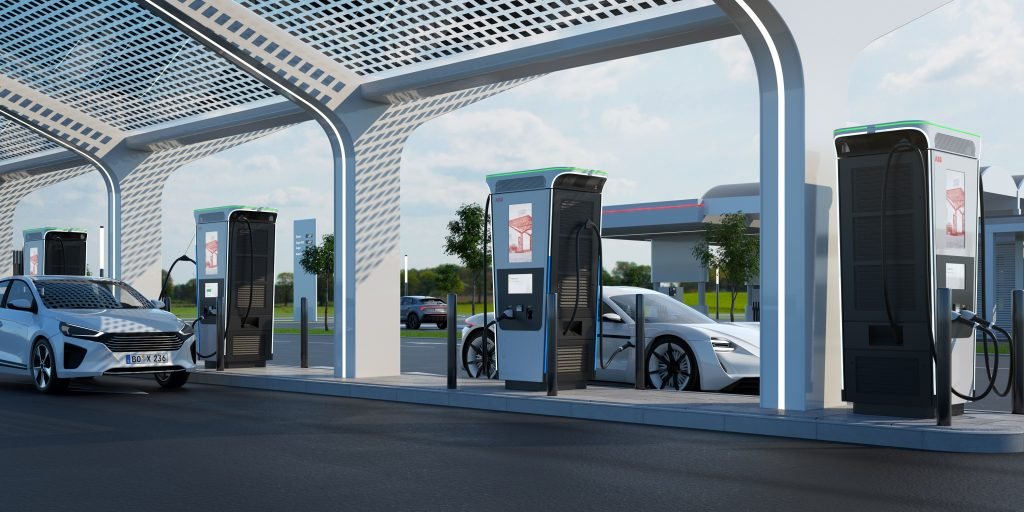
Electric Vehicle Charging in UAE
Electric vehicles (EVs) are becoming increasingly popular in the United Arab Emirates, supported by government policies, growing charging infrastructure, and sustainability goals. The country is investing heavily in EV technology to reduce carbon emissions and support clean transportation.
EV Charging Network in the UAE
The UAE now has a rapidly expanding network of EV charging stations.
-
The country has around 2,000 public EV charging stations, with most located in Dubai and Abu Dhabi.
-
In Dubai alone, the charging network has grown to more than 1,860 charging points.
-
These chargers include ultra-fast, fast, public, and wall-box charging options.
Charging stations are commonly found at:
-
Shopping malls
-
Hotels
-
Public parking areas
-
Petrol stations
-
Residential communities
This makes EV charging increasingly convenient for drivers across the country.
Major EV Charging Programs
DEWA Green Charger Initiative
One of the most important EV charging programs is operated by Dubai Electricity and Water Authority.
Key features:
-
Launched in 2015 to encourage electric vehicle adoption.
-
Network includes hundreds of chargers across Dubai.
-
Drivers can use QR codes or special charging cards to activate chargers.
Users can locate charging stations using the DEWA mobile app or online maps.
ADNOC & TAQA EV Charging Network
Another major infrastructure project is led by ADNOC Distribution and TAQA.
Plans include:
-
Building tens of thousands of charging points in Abu Dhabi by 2030.
-
Installing EV chargers at fuel stations and highways.
These projects aim to make EV charging available across the entire UAE.
Types of EV Chargers Available
EV charging stations typically fall into three main categories:
1. Slow Chargers (Level 1)
-
Used at homes or workplaces
-
Charging time: 6–12 hours
2. Fast Chargers (Level 2)
-
Found in malls and public parking
-
Charging time: 2–4 hours
3. Ultra-Fast Chargers (DC Fast Chargers)
-
Located on highways or major hubs
-
Charging time: about 20–40 minutes
Fast-charging technology is expanding to support electric taxis and long-distance EV travel.
EV Charging Costs in UAE
For many years, EV charging in the UAE was free to encourage adoption. However:
-
Paid charging began in 2025 as the network expanded.
-
Fees depend on the charger type and electricity consumption.
Many EV drivers pay through:
-
Mobile apps
-
Charging cards
-
Utility accounts linked to charging networks
Government EV Policies
The UAE government has launched several initiatives to support EV adoption.
Key goals include:
-
Increasing EV adoption nationwide
-
Expanding public charging infrastructure
-
Supporting clean energy transportation
The National Electric Vehicles Policy aims to create a nationwide charging network and regulate EV infrastructure development.
The country also targets 50% of vehicles to be electric by 2050 as part of its clean energy strategy.
Future of EV Charging in UAE
Experts expect EV infrastructure to grow rapidly in the coming years.
Predictions include:
-
23,000 charging stations needed by 2030 to support EV growth.
-
Expansion of ultra-fast charging stations.
-
Charging networks integrated with smart city technology.
With strong government support and rising EV sales, the UAE is becoming one of the leading electric mobility markets in the Middle East.